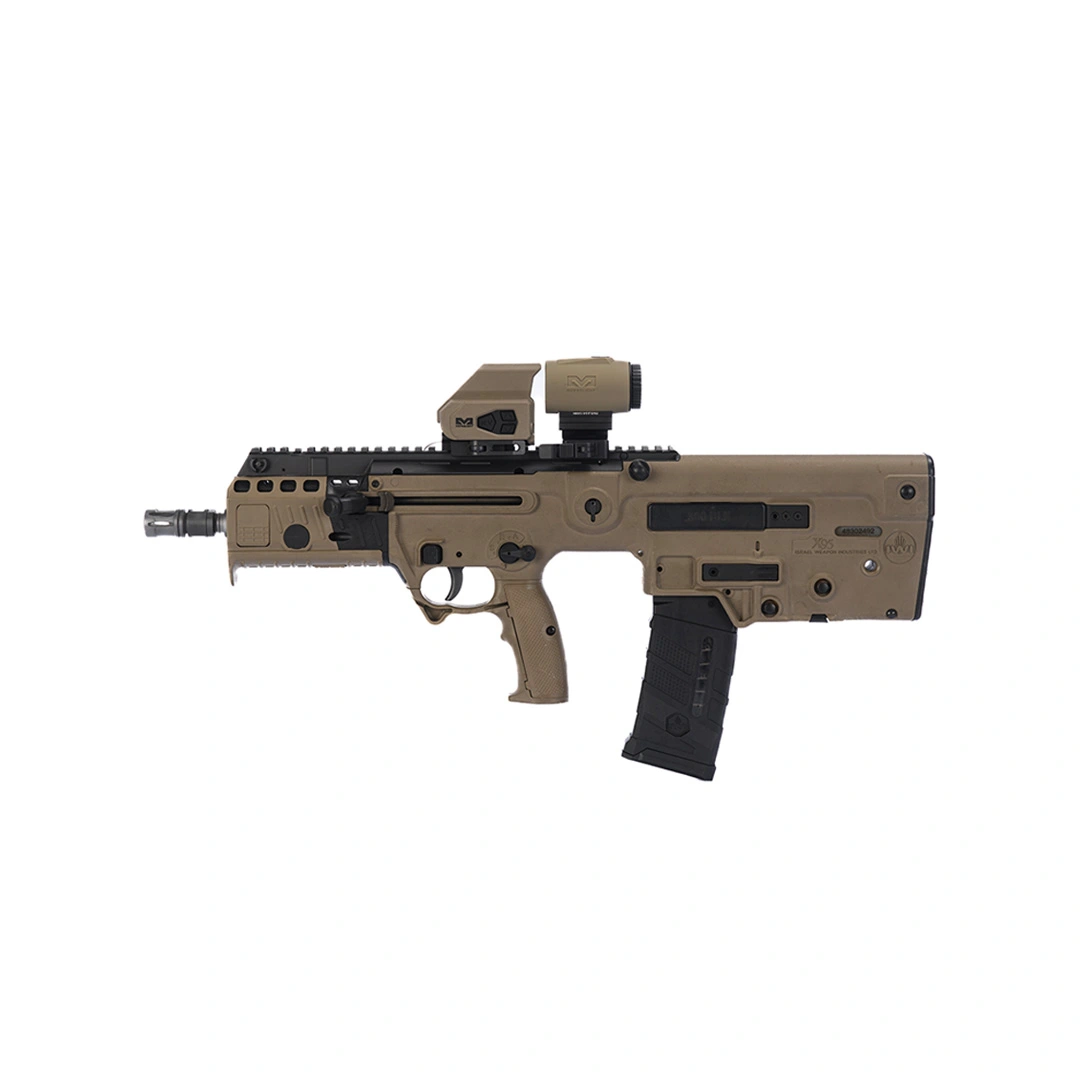
Israel Defense Forces Expands Use of IWI X95 Rifles with New Delivery of X95 Micro-TAVORs
European Defence Review (EDR Magazine) | March 30, 2026
As reported by EDR Magazine on March 30, 2026, the Israel Defense Forces has taken delivery of thousands of additional X95 MICRO-TAVOR rifles, the bullpup-configured 5.56×45mm platform that has served as the IDF's standard-issue infantry rifle since its formal selection in 2009, in the latest tranche of the country's long-running modernisation of its frontline small-arms inventory.
The X95 has had a distinctive design philosophy from the outset: rather than incremental refinement of a conventional assault-rifle pattern, it was built around a bullpup architecture in which the action and magazine sit behind the trigger group. The result is a rifle that integrates a long barrel within a substantially shortened overall length, a geometry that delivers ballistic performance comparable to a full-length carbine while keeping the weapon short enough to manoeuvre easily inside vehicles, doorways, stairwells, and the kind of subterranean environments that have defined Israeli combat experience over the past decade. The platform was developed in close cooperation with elite IDF units, and the design choices reflect direct user input: combat in dense urban terrain, in tunnels, and against asymmetric threats that often appear and disappear within seconds.
The technical envelope EDR describes is what makes the X95 a continuing fit for that mission. The rifle is built from a high-strength, impact-modified polymer, giving it a lightweight platform that nevertheless withstands harsh operational environments and reduces the logistical burden on infantry units. Its closed-bolt gas-piston system is engineered for reliable firing across the full range of field conditions, and fully interchangeable components streamline field maintenance, the X95 strips into just two parts for cleaning, an unusually low number for a service rifle and a meaningful advantage when a soldier needs to perform maintenance under time pressure or in poor conditions. The X95 is fully ambidextrous, accommodating both right- and left-handed operators without parts changes, and carries a 360° Picatinny rail interface that allows extensive customisation with optics, lights, lasers, and other mission-specific attachments. Its rear-biased centre of gravity reduces felt recoil and provides a stable shooting position across a wide range of postures, including one-handed and two-handed configurations.
The strategic significance of this latest delivery sits at the intersection of two themes. The first is operational readiness: the X95 is actively deployed in current IDF operations, and continuing to feed thousands of fresh rifles into both active-duty and reserve formations keeps standardisation high across the force at a moment when the entire structure of Israeli ground-combat capability has been re-thought after October 7. The second is the X95's role as a benchmark export platform. The rifle is combat-proven by military and police forces around the world, meets NATO small-arms standards including the relevant environmental specifications, and has been chosen by foreign customers in part on the strength of its IDF service record. Every IDF reorder, in effect, refreshes the export case: it sends a signal to procurement officers elsewhere that the rifle remains the operational standard of one of the world's most actively engaged ground forces.
Looking forward, the X95 line continues to evolve. The 2026 delivery, EDR notes, reflects a broader commitment to keeping the IDF's small-arms posture aligned with the demands of modern warfare, and the same multi-calibre, modular architecture that has made the X95 attractive to special-forces, law-enforcement, and military users across more than 15 years of service is the foundation on which the next generation of platform refinements will sit.
To read the full article in European Defence Review, click here.